
Bonus: Caleb "The Negro Artist" Rainey - Transcript
Bonus series on artists resisting today
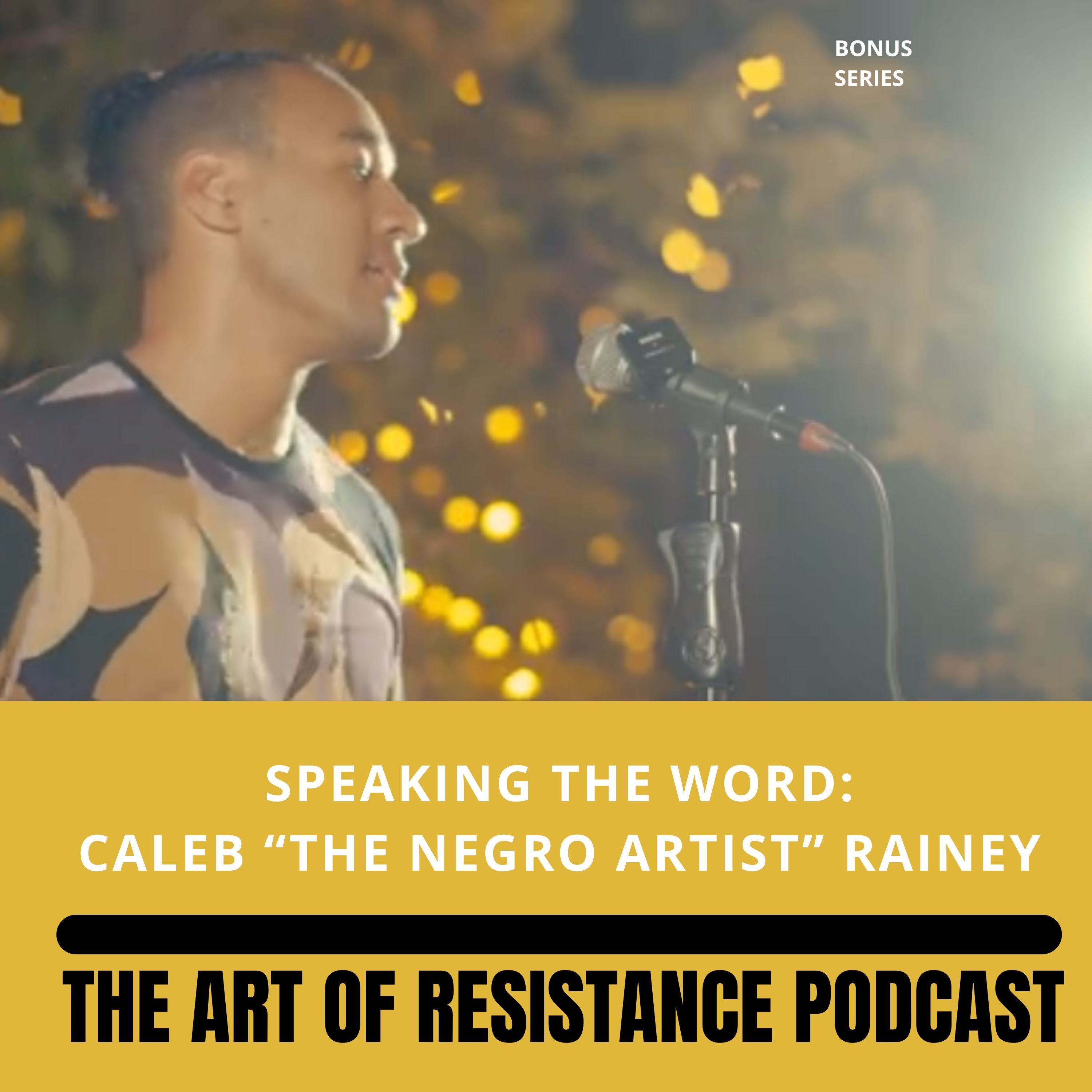
Speaking the Word: The art of Caleb ‘The Negro Artist’ Rainey
This is a special bonus episode of The Art of Resistance, focusing on modern artists creating writing, music, and more to resist the status quo.
Clip from “Protest”
Caleb Rainey grew up in Missouri. And he experienced the things a lot of young black men experience in this country. Like teachers treating him less than. Or police pulling him over for no reason.
Perhaps because of this, he started writing early. It was a way to feel seen, to feel validated.
And while he was intrigued by a poetry club at school, it was dedicated to a certain kind of poetry. You know the kind: buttoned-up, heavily-structured. White.
But then, he found something that demanded to be heard.
[Clip from “Spoken Word: The Roots of Poetry]
That was poet Sarah Kay in a 2011 interview.
When it comes down to it, our human history is one of oral tradition. Writing is something very new in comparison to the storytelling that has defined humanity.
And in ‘Western’ society, written culture has often been used as a form of dominance. For centuries working people, indigenous peoples, and those not part of the white ruling classes were not taught to read and write (and in some cases prohibited). So oral tradition continued as a way to tell real stories of real people.
By the 1920s and 30s, spoken word as an art form was paired with jazz music in the Harlem Renaissance and later in the 1950s in the Beat scene. In the 60s and 70s, black poets affiliated with the civil rights and black arts movements, including Gil Scott-Heron, used spoken word poetry. These poets are often tied to the birth of hip hop and rap a few years later.
[Clip: Whitey on the Moon]
That was Gil Scott Heron’s “Whitey on the Moon,” recorded in 1970.
For Caleb, what was the appeal of spoken word poetry?
[Clip - Caleb]
Caleb came to Iowa as a young adult. He was writing a lot about race, unpacking feelings and experiences. And he started performing spoken word… in primarily white spaces.
That’s when he came up with his performance name: The Negro Artist.
[Clip - Caleb]
Over the years, Caleb has made a mark on the scene, in Iowa and around the country. Filmmaker Nik Hearon even made a documentary, called The Negro Artist.
Today, Caleb teaches young people in IC Speaks, a group based in Iowa City working to empower youth to speak their truths.
[Clip - Caleb]
Like all the art we discuss in this show, there’s the idea that – what does it really matter? What does art mean in times like this? What does poetry actually do in today’s world?
[Clip - Caleb]
That’s art as resistance.
Experience more of Caleb’s spoken word at the YouTube Channel, The Negro Artist. And stay through the credits for a full performance by Caleb in 2022 accompanied by the band Wave Cage.
The Art of Resistance is a podcast from Rebel Yell Creative. Season 1 told the full stories of artists in the past, like Gran Fury, Emory Douglas, and Zitkala-Sa. This bonus series tells mini stories of modern art working as resistance.
Sign up at theartofresistancepodcast.com for full episode transcripts, art, music, and more. Plus, get a weekly newsletter full of reading, watching, listening, and acting.
This is Amy Lee Lillard, and I created, wrote and produced this show.
Thanks for listening. And see you next time.
SOURCES AND FURTHER READING / WATCHING
A wonderful conversation with Caleb Rainey on Nov 12
The Evolution of Spoken Word Poetry
Spoken Word Poetry: Hold Onto that History.
Gil Scott Heron on “Whitey on the Moon”; Performance of “Whitey on the Moon”
If you like The Art of Resistance, the best way to show your support is a paid subscription. This is independently produced art, and subscribing helps keep the show going!
Other ways to show your support: Share the show with your friends; buy me a coffee; and/or join the Rebel Yell Creative community!